

BY JULA MAE E. BESEOS, PhD in Agricultural Engineering/Central Mindanao University
A SOLAR-POWERED aquaponics system developed through engineering innovation and community partnership is helping demonstrate how renewable energy and smart agricultural technologies can support sustainable food production and climate-resilient farming in schools and communities.
The project is an initiative of the Department of Agricultural and Biosystems Engineering (ABE) of Central Mindanao University (CMU), led by Dr. Jula Mae E. Beseos and Dr. Roejae Carlo A. Ang, in collaboration with undergraduate student researchers, and was implemented at the Bukidnon National School of Home Industries (BNSHI) in Maramag, Bukidnon, as its partner institution.
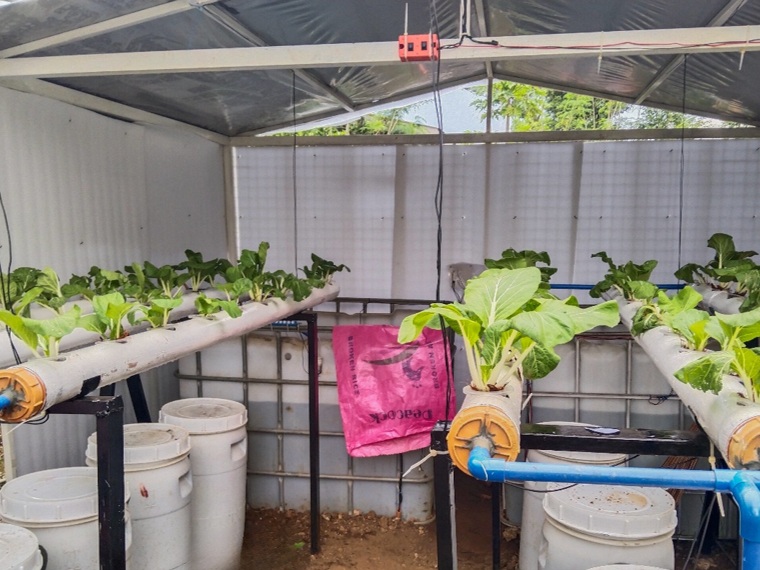
The initiative combines fish production and soilless vegetable cultivation in an integrated, closed-loop aquaponics system powered by solar energy. It was developed as part of the department’s commitment to advancing climate-smart agriculture and supporting school-based food production initiatives.
At the heart of the system is an Arduino-based automated monitoring and control setup equipped with sensors that continuously track important water quality parameters, including temperature, pH, and dissolved oxygen.
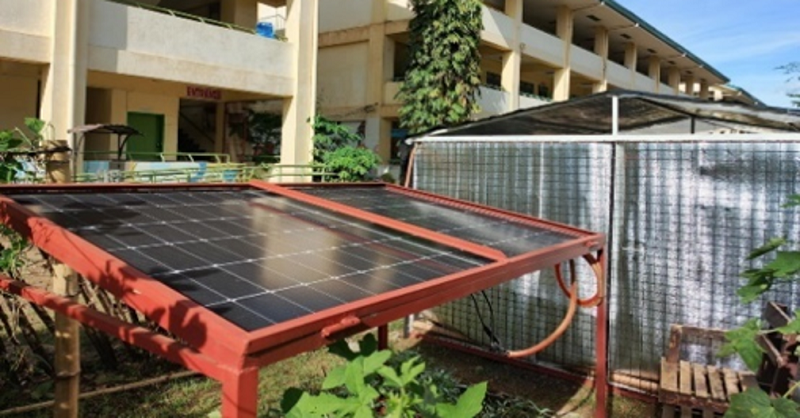
These measurements help maintain suitable conditions for Nile tilapia and Black Behi pechay while providing users with real-time information for managing the aquaponics system. The system is powered by a 435-watt solar panel supported by a battery backup, allowing it to continue operating at night and during periods of limited sunlight.
According to the research team, calibration and validation tests showed that the sensors provided accurate and reliable measurements, making them suitable for automated monitoring and system management.
As a co-author, we also examined different combinations of water quality sensors to determine the most effective monitoring configuration. Results showed that the combination of temperature and pH sensors provided the most stable water conditions and the highest filtration efficiency.
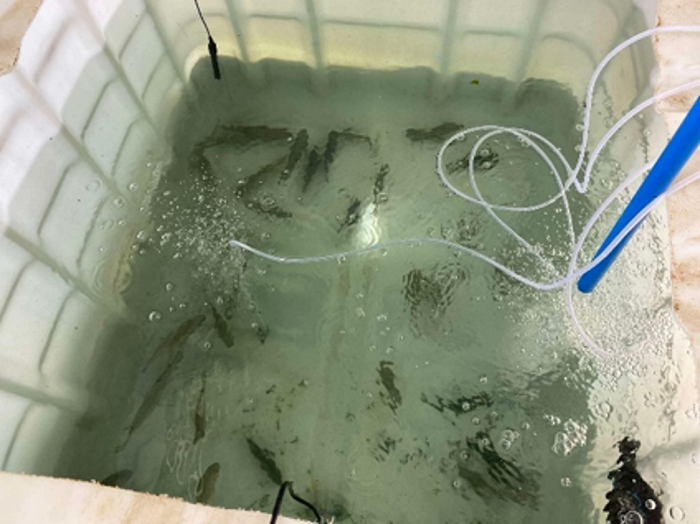
The addition of a dissolved oxygen sensor further improved the system by providing a more comprehensive picture of the aquatic environment.
The study likewise compared two filtration designs—a five-drum system and a three-drum system—to determine their effects on vegetable production and fish growth. Throughout the production cycle, the researchers monitored temperature, pH, dissolved oxygen, and nitrate levels to assess the performance of the two systems.
While both filtration systems produced comparable plant heights and supported healthy tilapia growth, the five-drum filtration system demonstrated better performance in vegetable production. It produced an average pechay yield of 0.0291 kilogram per plant, compared with 0.0222 kilogram per plant from the three-drum system. The findings highlight the importance of effective filtration in aquaponics systems.
The research team explained that the five-drum design provided improved mechanical and biological filtration, creating a larger surface area for beneficial microorganisms. These microorganisms play a critical role in converting fish waste into nutrients that can be absorbed by plants, thereby improving nutrient cycling and supporting crop production.
The researchers also observed that water temperature had a positive relationship with pechay yield, while increasing pH levels were associated with lower production. Dissolved oxygen, meanwhile, remained within the recommended range during the experiment, indicating that both filtration systems were able to maintain suitable conditions for tilapia culture.
Beyond its technical and research value, the project has become an educational facility for BNSHI students. The system provides learners with hands-on exposure to agricultural engineering, renewable energy, automation, environmental monitoring, and sustainable food production, supplementing their curricular requirements through actual laboratory demonstration.
The initiative also complements the Department of Education’s Gulayan sa Paaralan Program by introducing an energy-efficient and environmentally sustainable approach to producing vegetables and fish. Through the integration of aquaculture, crop production, solar energy, and automated monitoring, the project demonstrates how schools can contribute to food security and improved nutrition while providing students with practical knowledge and skills relevant to modern agriculture.
Looking ahead, the research team recommends integrating additional water quality sensors, particularly for ammonia and nitrate monitoring, to further improve real-time system management and long-term sustainability.
The researchers also encourage the replication of solar-powered aquaponics systems in other schools and farming communities, particularly in areas seeking climate-resilient and energy-efficient food production technologies.
The cultivation of high-value crops is likewise recommended to increase the economic potential of aquaponics systems, diversify food production, and provide additional income opportunities for communities. Through the collaboration of ABE faculty, student innovators, and community partners, the project demonstrates the potential of science, technology, and engineering to address pressing agricultural challenges.
More importantly, the solar-powered aquaponics system offers a practical model of how renewable energy and smart farming technologies can help build more sustainable, resilient, and food-secure schools and communities in Mindanao.
Through engineering innovation and strong community partnerships, the project demonstrates how renewable energy and smart agricultural technologies can contribute to addressing food security challenges while equipping students and communities with practical knowledge and skills for a more sustainable and climate-resilient agricultural future.