

THE MINDANAO Development Authority (MinDA) strengthened the export pathway for Mindanao’s mango industry to meet New Zealand’s export standards.
Secretary Leo Tereso A. Magno, MinDA Chairperson, emphasized the agency’s readiness to assist stakeholders in addressing regulatory and coordination requirements to help the industry.
“If there are regulatory needs or any aspect of this effort that requires assistance from the Mindanao Development Authority, our team is open and ready to provide the necessary support,” Magno said in a press statement.
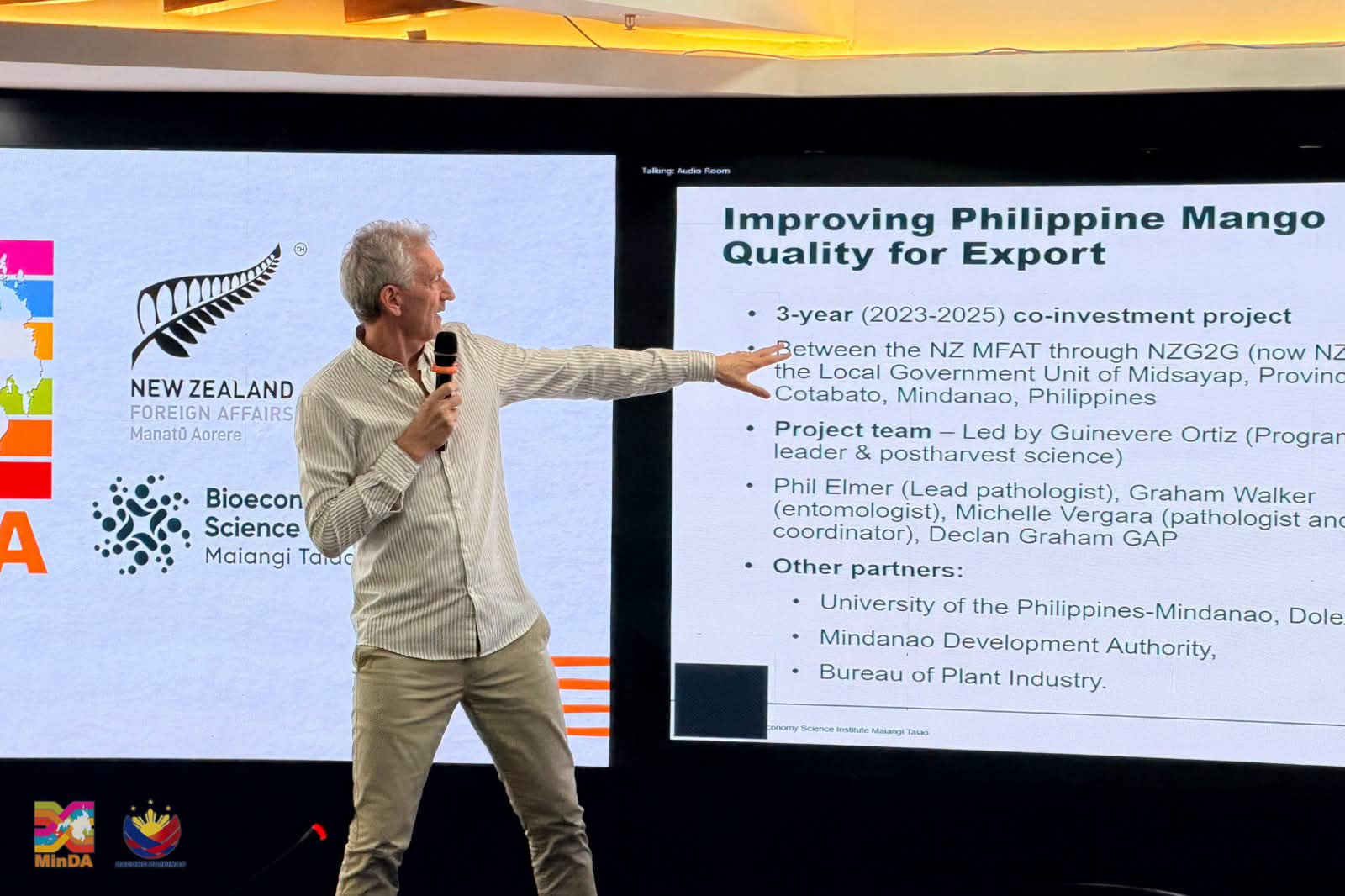
MinDA, with New Zealand Bioeconomy Science Institute (NZ-BSI) and Plant & Food Research, convened stakeholders on September 10 to discuss the requirements for accessing the New Zealand market.
The gathering also marked the 60th anniversary of Philippines-New Zealand diplomatic relations.
The agency is pushing to convert the market opportunity into a controlled, quality-backed entry strategy by first establishing credibility among Filipino consumers in New Zealand, all while ensuring compliance, product consistency, and reliable shipment performance.
Dr. Philip Elmer, NZ-BSI Principal Scientist and Science Team Leader for Biological Control and Induced Resistance, highlighted the project’s focus on improving mango quality through pathogen identification, residue management, and optimized spray programs.
Good agricultural practices, post-harvest treatment, and end-to-end monitoring for export readiness were also tackled.
“The program is about getting the production system right, managing residues and pests effectively, strengthening food safety, and building a pathway that can support high-quality mango exports into demanding international markets,” Elmer said.
The three-year co-investment initiative was implemented from 2023 to 2025 by New Zealand’s Ministry of Foreign Affairs and Trade and the Local Government Unit of Midsayap, with partners including MinDA, NZ-BSI/Plant & Food Research, UP Mindanao, DoleAsia, and the Bureau of Plant Industry.
Mario Avenido, a local mango grower from Digos City, said the project contributed to field operations, citing the reduced number of crop-spraying applications from about 21 to 10.
Avenido said lessened spraying time also contributed to better fruit quality.
ASec. Romeo M. Montenegro, MinDA deputy executive director, said the orientation is part of the project with New Zealand, “Supporting High-Quality Residue-Compliant Mango Exports from the Philippines.”
“From the very beginning, we have been committed to providing the policy support, coordination, and strategic platform needed to turn this vision into reality, because we believe that Mindanao’s mango industry holds immense potential and our farmers deserve premium access to high-value markets like New Zealand,” Montenegro said.
Dr. Catherine McIntosh, New Zealand Ambassador to the Philippines, recognized NZ-BSI, MinDA, the Local Government Unit of Midsayap, and mango stakeholders in developing a science-based approach to improving Philippine mango exports.
“This project has brought together not only institutions but also people, creating new friendships and strong working relationships while addressing the challenges that have limited the ability of Philippine mangoes to reach premium international markets,” McIntosh said.
She noted that New Zealand is expanding economic and trade exchange with the country by 50 percent through practical market opportunities and stronger commercial linkages.